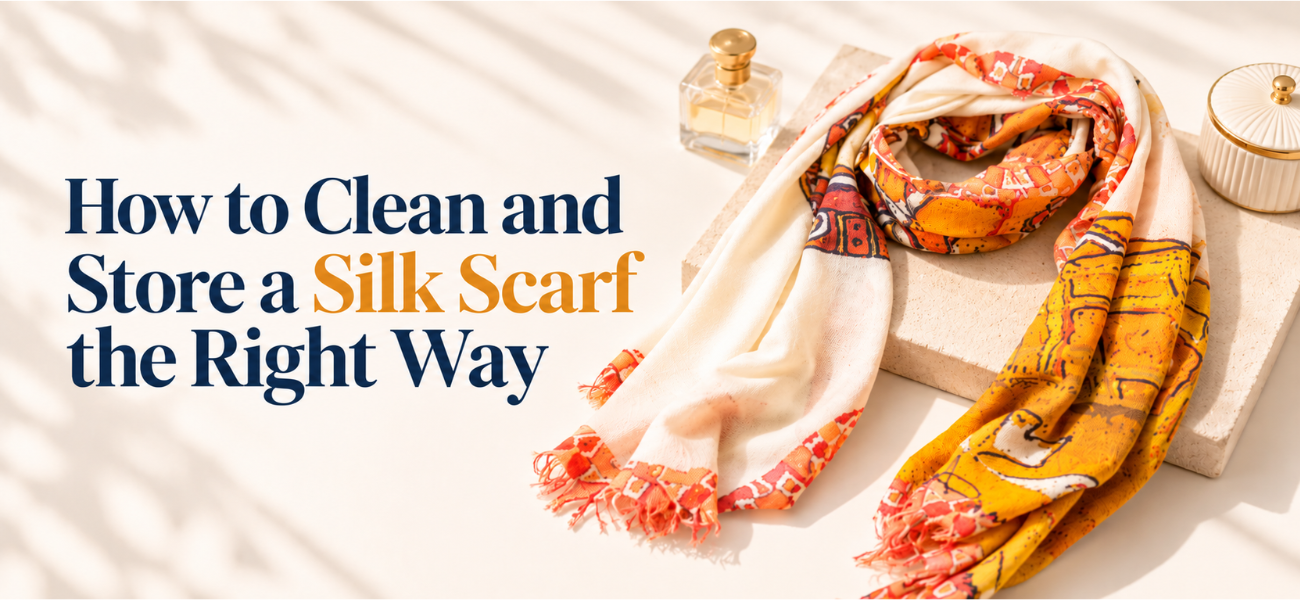
Knowing how to clean a silk scarf matters because silk fibers are delicate. Water that is too hot, rough handling, harsh detergent, and careless drying can dull the color, roughen the fabric, and distort the shape. The right method depends on the care label and the scarf’s construction, not on a general rule. This guide explains how to check that label, choose between hand washing and dry cleaning, dry and store your scarf safely, and handle stains with caution. It cannot promise that a scarf will never change over time, but careful habits go a long way.
The safest way to clean a silk scarf is to check the care label first, then choose a method that label allows. If hand washing is permitted, use cool water and a silk-safe detergent, handle the fabric gently, rinse, and dry it without wringing. If the label says dry clean only, take it to a professional and do not try to wash it at home.
The label tells you whether the scarf can be hand washed, must be dry cleaned, or needs other handling. It also shows the fabric content. A 100% silk scarf and a silk-blend scarf can need different care. Printed scarves with trims, fringes, or special finishes may need extra caution.
For example, the Conch-a-Line Silk Scarf is 100% silk, and its care instructions say dry clean only. A scarf like this should never be hand washed, even though it is silk. Always follow the label over the fabric type.
Hand washing is only an option when the label permits it. Dry cleaning is the safer choice for dry-clean-only scarves, valuable pieces, stubborn stains, uncertain colorfastness, and scarves with embellishments or special finishes.
Washing time and water temperature should follow the detergent and the care label. Avoid long soaks unless the instructions call for one.
| Method | When it may be appropriate | Key precautions | When to choose professional care |
|---|---|---|---|
| Hand washing | The care label allows it and the scarf has no fragile trims or finishes | Use cool water and a silk-safe detergent. Handle gently. Never wring. | The label says dry clean only, colorfastness is uncertain, or the scarf has embellishments |
| Professional dry cleaning | The label calls for it, or the scarf is valuable or delicate | Tell the cleaner the fabric type and any stains. Ask about silk specifically. | Stubborn stains, unknown stains, or any scarf you are unsure about |
Choose a mild detergent made for silk or other delicate fabrics, and follow the product’s directions. Regular laundry detergent is formulated for sturdier fabrics and may be too harsh. Avoid bleach, chlorine products, whiteners, and strong stain removers, since they can damage the fibers and affect color.
No detergent makes an unsuitable method safe. Check the care label first, then read the product’s instructions. Be cautious of any claim that one product is universally safe for silk, because scarves and finishes vary.
Drying is where many scarves get stretched or distorted. Press out excess water gently rather than wringing or twisting. Lay the scarf flat on a clean, absorbent towel, roll the towel gently to remove moisture, then lay the scarf on a dry towel or a flat surface to air dry, shaping it by hand as you go.
Keep the scarf out of direct sunlight and away from radiators or other heat sources. Avoid tumble dryers, which are generally unsuitable for delicate silk. Only iron a scarf if the care label permits it, use a low setting and a pressing cloth, and never iron a damp scarf. Make sure the scarf is completely dry before you store it.
Good storage protects silk from moisture, sunlight, snagging, and creasing. Store scarves only when they are completely clean and dry. Keep them in a cool, dry place away from direct sunlight, and avoid damp or humid areas such as bathrooms.
The Conch-a-Line care notes suggest storing folded or rolled in a cool, dry place away from direct sunlight, which is a sensible approach for most silk scarves. Rolling can reduce creasing for some pieces, but check the care label first.
Use clean, dry, breathable storage. Keep scarves separate from items with rough edges, zippers, or jewelry that can snag the fabric. Avoid overcrowded drawers, since compression can crease scarves. Check stored scarves now and then for dampness or signs of pests.
Hanging can be suitable for some scarves, but it may stretch the fabric over time. Folding or rolling is usually the safer choice for delicate silk.
Fading often comes from avoidable exposure. Keep scarves out of direct sunlight, both when you wear them outdoors and when you store them. Use cool water and mild detergent when washing is allowed, and avoid harsh cleaning products. Limit unnecessary washing, since each wash adds handling and wear.
Try to keep perfume, hairspray, and cosmetics off the scarf, since these can leave marks or affect the fabric. Dry the scarf away from heat, and handle it gently when wet. Still, no technique guarantees that color will never change, because dyes, printing, and construction vary.
Stain removal on silk requires caution. Start by checking the care label, and note what caused the stain. If the label calls for dry cleaning, take the scarf to a professional and tell them what the stain is.
If washing is permitted and the stain is minor, blot gently with a clean white cloth rather than rubbing, which can spread the stain or damage the fibers. Test any permitted treatment on an inconspicuous area first. Do not use bleach or strong stain removers. Avoid home remedies such as vinegar, baking soda, or alcohol, since they can affect silk and dye. For stubborn or unknown stains, ask a professional textile cleaner. Not every stain can be removed.
Simple habits help a scarf last. Air it out after wearing, especially in a warm or humid room. Clean it only when it needs cleaning, and follow the label. Handle it with clean hands, and keep it away from rough surfaces and jewelry that can snag the fabric. Before storing, check the scarf for spots, snags, or dampness. Treating small issues early is easier than treating them later.
When choosing a scarf, consider its fabric composition, care instructions, size, print, and how it fits your wardrobe. Think about how much care you are willing to give it. A dry-clean-only scarf may suit an occasional wear, while an easier-care piece may suit everyday use. For a fuller comparison, see our guide to choosing a luxury silk scarf. You can also browse the scarves collection and check each product page for composition and care details.
Caring for a silk scarf comes down to four habits: follow the care label, choose the correct cleaning method, dry gently, and store it clean, dry, and out of direct sunlight. Avoid unnecessary washing, and treat stains with caution. If you want to learn more about caring for silk, read our guide to washing a silk robe without fading the print, which covers the same care principles for robes. For more styling ideas, visit the Journal or the shop.
Check the care label first. If it allows hand washing, use cool or lukewarm water and a mild detergent made for delicate fabrics. Move the scarf gently without scrubbing or twisting, rinse in clean water, and press out excess water. Lay it flat on a clean towel to dry, away from sunlight and heat. If the label says dry clean only, take it to a professional instead.
Only if the care label explicitly permits machine washing. Many silk scarves are better hand washed or dry cleaned, because agitation and spinning can stress delicate fibers and trims. If machine washing is allowed, follow the stated temperature, cycle, and detergent exactly. If the label is silent or says no, do not machine wash the scarf.
It depends on the label. Hand washing is gentler when the label allows it and lets you control temperature and handling. Dry cleaning is the right choice when the label calls for it, for stubborn or unknown stains, or for scarves with embellishments. When you are unsure, ask a professional cleaner who handles silk before you wash it at home.
Store scarves only when they are completely clean and dry. Fold them loosely or roll them, and keep them in a cool, dry place away from direct sunlight. Use clean, breathable storage and avoid overcrowded drawers. Keep scarves away from rough surfaces, zippers, and jewelry that can snag. Avoid damp or humid spaces, and check stored scarves now and then.
Keep the scarf out of direct sunlight, use cool water and a mild detergent when washing is allowed, and avoid bleach and harsh products. Limit unnecessary washing and dry the scarf away from heat. Keep perfume and cosmetics off the fabric. These habits reduce avoidable wear, but no method can guarantee that color will never change over time.
It is better to use a mild detergent made for delicate fabrics. Regular laundry detergent is formulated for sturdier materials and may be too harsh for silk. Always follow the product’s directions and the care label. Avoid bleach and whiteners. No detergent makes an unsuitable washing method safe, so check the label before washing.
Check the care label first, and note what caused the stain. If washing is permitted, blot gently with a clean white cloth rather than rubbing, and test any treatment on a hidden area first. Avoid bleach, strong stain removers, and household remedies such as vinegar or baking soda. For stubborn or unknown stains, ask a professional textile cleaner. Not every stain can be removed.
Folding or rolling is usually the safer choice for delicate silk, since hanging can stretch the fabric over time. Fold loosely rather than sharply, and store the scarf flat in a drawer or on a shelf. Hanging may suit some scarves, but check the care label and avoid stretching the fabric.
Clean a silk scarf only when it needs it. Wear, handling, and exposure to perfume or spills affect how often that is. Between wears, airing the scarf and handling it carefully is often enough. Avoid unnecessary washing, because each cleaning adds handling. Always follow the care label for how often and how to clean it.