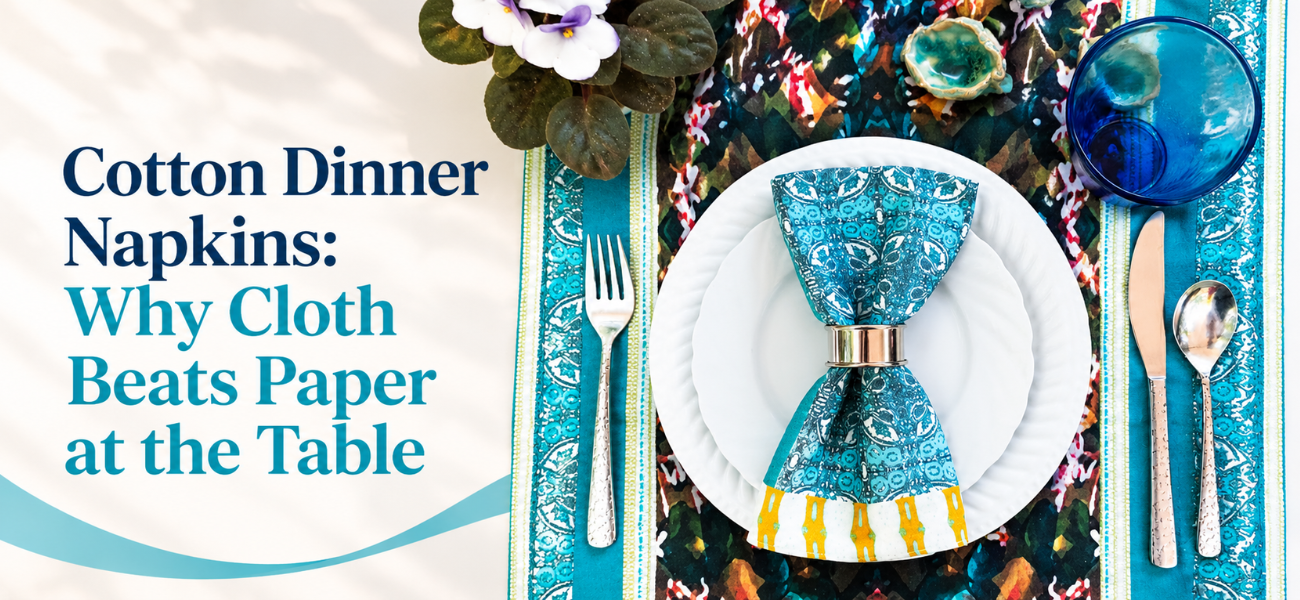
Cotton dinner napkins offer a reusable alternative to disposable paper, and the difference shows up at every meal. Cloth feels softer against the hands and lips, holds its shape at the table, and can be washed and used again. Paper has its place, especially for large outdoor events. But for everyday dinners and home entertaining, clothes often make more sense. Its value depends on the fabric, the care it receives, and how often it is used, so this guide covers all three.
Cotton dinner napkins are reusable fabric napkins that can be washed according to their care instructions, which makes them a practical option for regular meals and gatherings. They give the table a more considered look than paper and handle everyday use well.
The main advantages are reusability, comfort, and presentation. A cloth napkin can be used at many meals before it needs replacing, and it feels more substantial in the hand. It also adds color and texture to the table in a way paper rarely does. Cotton is a common choice because it is breathable, familiar to wash, and available in many weights and finishes.
| Factor | Cotton cloth napkins | Disposable paper napkins |
|---|---|---|
| Material | Woven fabric, often cotton or a cotton blend | Paper, usually single use |
| Reusability | Designed to be washed and used again | Used once, then discarded |
| Washing requirements | Needs laundering according to the care label | None |
| Everyday convenience | Needs a wash cycle and storage space | Ready when needed, no cleaning |
| Table presentation | Adds color, texture, and a more formal look | Practical and casual |
| Storage | Needs a dry drawer or shelf between uses | Stored in a pack, takes little space |
| Ongoing cost | Depends on how often it is used and washed | Recurring purchase each time it is used |
| Waste | Less single-use waste when reused | Single-use waste after each meal |
Paper napkins are still a sensible choice for large outdoor events, picnics, or gatherings where laundry access is limited. Clothes are not always better for every household. It is better when you use napkins regularly and can wash them comfortably.
Reusable napkins are most valuable for households that eat together often. Each napkin can be used at many meals, so there is less to buy and throw away. Fabric also feels softer on the lips and hands than paper, which many people notice straight away.
Cotton napkins can be styled in many ways. Solid colors suit everyday meals, while printed or painted designs add a focal point for guests. How a napkin performs depends on its construction. A tightly woven napkin tends to feel thicker and more substantial, while a lighter weave feels softer and folds more loosely. Cotton-blend napkins can differ in feel and care from pure cotton, so always check the composition.
Start with the fabric composition on the product page or label. A pure cotton napkin and a cotton blend may look similar but wash and feel differently. Next, check the size and thickness. A larger napkin covers the lap better, while a smaller one suits casual meals.
Consider absorbency and texture. A heavier cloth absorbs more and feels plush, while a lighter one folds neatly and dries faster. Choose colors and prints that suit your table. A solid napkin works with almost any setting. A printed napkin can carry the color scheme of the table, especially if it is part of a set of coordinated linens.
Think about how you will use them. For everyday meals, choose napkins that wash easily and hold their color. For entertaining, you may prefer napkins with a more decorative design. Coordinate rather than match the napkins to your tablecloth or runner.
Avoid bleach and aggressive stain removers unless the label allows them. Do not assume that hot water or high heat is safe for every napkin. For stubborn oil or beverage stains, check the label and consider professional cleaning if you are unsure.
Cloth napkins cost more up front than a pack of paper, but the real comparison depends on how you use them. Paper is an ongoing cost: you buy it again every time you use it. Cloth is a one-time purchase that is used many times, with costs for laundry detergent, water, and energy each time it is washed.
Whether cloth saves money depends on how many napkins you need, how often you wash them, how often you replace worn ones, and how many meals and gatherings you host. A household that eats together most nights is likely to see cloth work out more affordably than one that uses napkins only for occasional guests. Since prices and set sizes vary, compare the actual price per napkin for the set you are considering, and add your own laundry costs.
Cotton napkins suit a wide range of table settings. For casual family dining, use simple solid napkins with everyday plates and glasses. A single napkin placed to the left of the fork keeps the table practical and warm.
For weekend brunch, choose a lighter print or a soft color, and fold the napkin into a loose shape. For dinner parties, use cloth napkins at every place with your best plates and glassware. A coordinated napkin in one accent color from the table runner or centerpiece ties the setting together.
For formal gatherings, a more structured fold such as a triangle or a pocket can make the table look deliberate. Keep the design of the napkin in mind as well: a painted or printed napkin works best when the rest of the table stays calm. For more table-setting ideas, read our guide to styling a tablescape with artistic table linens.
Finished look: a clean, flat rectangle that shows the design.
Suitable for: everyday meals and casual dinners.
Tip: Press the folds flat with your hand so the napkin sits neatly.
Finished look: a triangle with the point facing the diner.
Suitable for: dinner parties and special meals.
Tip: Use a napkin that is not too thick, since bulky fabric makes sharp folds hard.
Finished look: a napkin that holds the fork and knife in a neat pocket.
Suitable for: family gatherings and dinner parties.
Tip: Use a generous napkin so the pocket is deep enough to hold the cutlery.
Finished look: a soft, relaxed shape that shows the print or colour.
Suitable for: brunch, celebrations, and holiday meals.
Tip: A softer fabric holds a loose fold better than a stiff one.
There is no single correct number. A household’s needs depend on how many people eat together, how often you wash, and how often you entertain. As a planning suggestion, a household of four that eats together most nights might keep about one napkin per person per day between laundry cycles, plus a few spares for guests. Households that wash weekly may need more than those that wash every few days.
Consider how often you entertain as well. If you host often, keep extra napkins on hand so you do not run out between washes. If you rarely host, fewer napkins may be enough. Start with a set that suits your everyday needs, then add more if you find yourself doing laundry too often.
Decorative napkins can be solid or printed. Solid napkins are easy to coordinate with almost any table and work well for everyday use. Printed napkins, especially those with artistic designs, add personality and can be the focal point of a setting. Choose a design that suits the room and the dinnerware, and keep the rest of the table calm if the napkin is busy.
Check the material, care instructions, and size before buying. Decorative napkins are often a good gift for someone who enjoys entertaining. You can explore the shop and read about the artwork that inspires the brand’s table pieces in the Journal.
Cloth napkins are a practical, attractive choice for many households. They reduce single-use waste, feel softer at the table, and can be styled in many ways. Paper still has its place for large events and situations without laundry access. The right choice depends on how you eat, how you entertain, and how much care you are willing to give your napkins. Check the fabric and care label, start with a set that suits your everyday meals, and build from there.
For everyday meals and home entertaining, cotton napkins are often the better choice. They can be washed and reused, feel softer against the lips, and give the table a more considered look. Paper is more convenient for large outdoor events or when laundry access is limited. Neither is better in every situation, so choose the option that suits how you eat and host.
Cloth napkins can be used many times, so they reduce single-use waste and avoid repeat purchases. They feel more comfortable in the hand and add colour and texture to the table. They also make ordinary meals feel more considered. The trade-off is that they need washing, drying, and storage between uses.
Yes, cotton napkins are designed to be washed and reused, provided you follow the care label. Repeated washing can gradually affect the fabric and colour, so use the washing temperature and method the label gives. Replace napkins that have worn thin, stained permanently, or lost their shape.
Check the care label first. Sort by colour, pre-treat stains gently, and wash with a mild detergent at the temperature the label gives. Dry according to the label and avoid direct sun for printed napkins. Press if permitted, then fold and store once completely dry. Avoid bleach and aggressive stain removers unless the label allows them.
Choose napkins that are easy to wash, hold their colour, and feel comfortable to use. Solid colours are versatile and forgiving for everyday meals. Check the fabric composition, since a pure cotton or cotton-blend napkin may feel and wash differently. Medium-sized napkins usually suit everyday dining well.
There is no universal number. As a planning suggestion, a household of four that eats together most nights might keep about one napkin per person per day between laundry cycles, plus a few spares for guests. Adjust for how often you wash and how often you entertain. Start with a set that suits everyday needs, then add more if laundry becomes frequent.
Yes. Coordinated cloth napkins at every place are a traditional part of a formal table. Choose a more structured fold such as a triangle or pocket, and match the napkin to the table linens and dinnerware. For very large outdoor gatherings, paper may be more practical, but cloth napkins suit most sit-down dinner parties.
Four simple folds work well for most tables: a rectangle for everyday meals, a triangle for dinner parties, a pocket for holding cutlery, and a loose decorative fold for brunch or celebrations. Lay the napkin flat, fold in halves or thirds, and press the folds with your hand. A softer fabric holds loose folds more easily.
They are worth buying if you eat together often, want a more considered table, and are prepared to wash and store them. The value depends on how often they are used and how many you need. Compare the price per napkin, and add the cost of washing. For occasional use, paper may be enough.