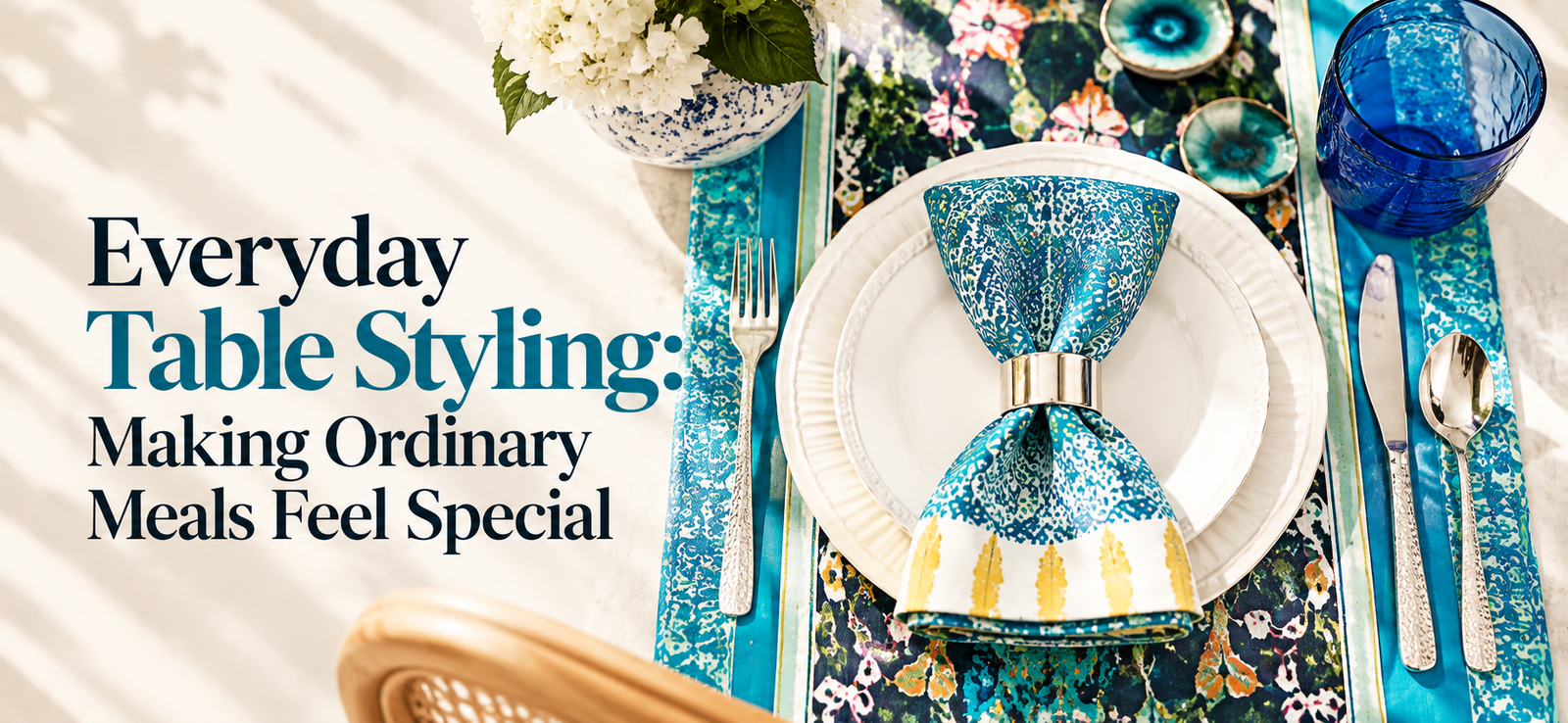
Most meals are not events. They are Tuesday dinners, quick lunches and breakfasts eaten before the day gets busy. Those are exactly the meals where a little table styling makes the most difference, because they happen so often. A few small choices can turn eating at the kitchen table from something you rush through into something you look forward to.
This guide focuses on simple, repeatable ideas for everyday dining. No elaborate centerpieces, no formal place settings and nothing you need to put away after one use. Just practical ways to make ordinary meals feel more intentional with linens, dishes, candles, natural elements and a bit of color.
Style an everyday dining table with a simple base, such as a runner or placemats, cloth napkins, plates you enjoy using and one small centerpiece like a bud vase or candle. Keep the palette to two or three colors, clear away clutter and add a seasonal touch now and then. The goal is a table that is easy to set every day.
It is easy to save nice things for special occasions. The trouble is that special occasions are rare. Styling your everyday table means you get to enjoy your favorite pieces far more often.
Small visual details also change how a meal feels. A cleared table with cloth napkins and a candle tells everyone that this is a time to sit down, slow down and pay attention to the food and each other. The effort takes a couple of minutes. The effect lasts the whole meal.
Before adding anything, take things away. Mail, keys, laptops and grocery bags make even a beautiful table feel chaotic. Give those items another home so the table can be a table.
This single habit does more than any décor. A clear surface is calm to look at and makes the pieces you add stand out.
A table runner is the simplest way to add color and pattern without covering the whole table. It protects the center of the table from serving dishes and can stay out between meals. An artistic runner with a painted design gives the table a focal point even when nothing else is on it. Sara Anderson’s home goods include cloth runners that carry her artwork onto the table.
Placemats define each person’s space and make cleanup easier. They also let you change the look of the table quickly, for example switching between two sets depending on the season.
A tablecloth softens a room and hides a worn surface. For everyday use, choose one that washes easily. Save more delicate clothes for occasions.
Switching from paper to cloth napkins is one of the most noticeable changes you can make. Cloth napkins feel better to use, look more considered and are reusable.
Tips for everyday napkins:
If you have plates you are saving for special occasions, consider using them more often. Everyday plates should be ones you enjoy looking at.
Everyday glassware should be sturdy and simple. A set of clear tumblers suits water, juice and even casual wine. Colored glass in one of your table’s accent colors can add a pleasant surprise without extra effort.
Setting a water glass at each place, even when you are not serving anything else, makes a table look finished.
You do not need a full formal setting. A fork, knife and spoon placed neatly beside each plate is enough. If you want a small upgrade, a flatware set with a warm finish, such as brushed gold, can add warmth, while matte finishes feel modern.
Everyday centerpieces should be low, simple and easy to maintain. Ideas include:
Keep the centerpiece small enough that you do not have to move it every time you serve food.
Candles are the quickest way to make a meal feel special. Light one or two at dinner, even on a weeknight. Use unscented candles at the table so they do not compete with the smell of food. Short pillar candles or tea lights in holders are practical and safe for everyday use.
Bringing something natural to the table connects the meal to the season. A few leaves, a sprig of herbs, a small branch or a bowl of fruit adds life and texture. Natural elements cost little and can change weekly.
A simple rule makes everyday styling easy: choose two or three colors and repeat them. If your runner has blue and green, pick napkins with one of those colors and a centerpiece that echoes the other.
Artistic linens make this easier because the palette is already chosen for you. Look at the design, pick the colors you like most and build from there. Art on nearby walls can also guide your choices. Our article on how original oil paintings can transform your living space explains how artwork shapes a room’s color.
You do not need to redecorate for every season. One small change is enough:
Swap one element and the whole table feels new.
An everyday table setting needs only a few things: a plate, a fork, knife and spoon, a water glass and a cloth napkin at each place, set on a runner or placemat. Add one small centerpiece, such as a bud vase or candle, in the middle. That is enough to make the table feel intentional without adding work.
Placemats, mugs you love, a small jug of milk and a bowl of fruit in the center. Let morning light do the rest.
A runner, simple plates and a glass of water at each place. Keep it quick but deliberate.
Cloth napkins, a candle and a small vase. Turn off the overhead light if you can and use a lamp or candlelight instead.
Add a patterned tablecloth or artistic runner, bring out colored glassware and put flowers or herbs in the center.
The secret to everyday table styling is making it easy to repeat. Keep your linens, napkins and candles somewhere close to the table. Choose pieces that wash easily. Build a small routine, such as clearing the table, laying the runner, setting napkins and lighting a candle, and it will soon take less than two minutes.
For occasions when you want to go further, our guide to styling a beautiful tablescape with artistic table linens shows how to build a table for dinner parties and holidays.
Clear the table, add cloth napkins and light a candle. Those three steps change the atmosphere of a meal in minutes. Using plates you love, adding a small vase of flowers or greenery and turning down overhead lights also help make an everyday dinner feel more considered.
No. A runner or placemats work well for everyday meals and are easier to wash and change. A tablecloth is useful if you want to soften the room or cover a worn surface, but it is not necessary for an attractive everyday table.
Yes. Cloth napkins can be washed with regular laundry and reused many times. Keeping a stack of eight to twelve means you always have clean ones ready. They feel nicer than paper, reduce waste and make even a simple meal look more deliberate.
A single bud vase, a small bowl of fruit, a potted herb or a few small candles all make easy everyday centerpieces. Keep it low and compact so it does not get in the way of serving dishes and you do not need to move it at every meal.
Choose two or three colors and repeat them across linens, napkins, dishes and centerpieces. Patterned or artistic linens make this easier, because the design already contains a palette. Pick one color as the main tone and use the others as accents.
There is no rule. Many people keep a consistent base, such as a runner and napkins, and change one small element each season, like flowers, fruit or candle colors. Small, regular changes keep the table feeling fresh without requiring a full redesign.
Ordinary meals are where good design gets used the most. If you would like to add painted color and pattern to your daily table, explore Sara Anderson’s runners and napkins, each drawn from her original artwork.
Everyday table styling is less about decoration and more about attention. A clear table, a runner or placemats, cloth napkins, plates you love and a candle can make any meal feel more intentional. Keep the routine simple, repeat a small color palette and change one detail with the seasons, and ordinary meals will start to feel a little more special.