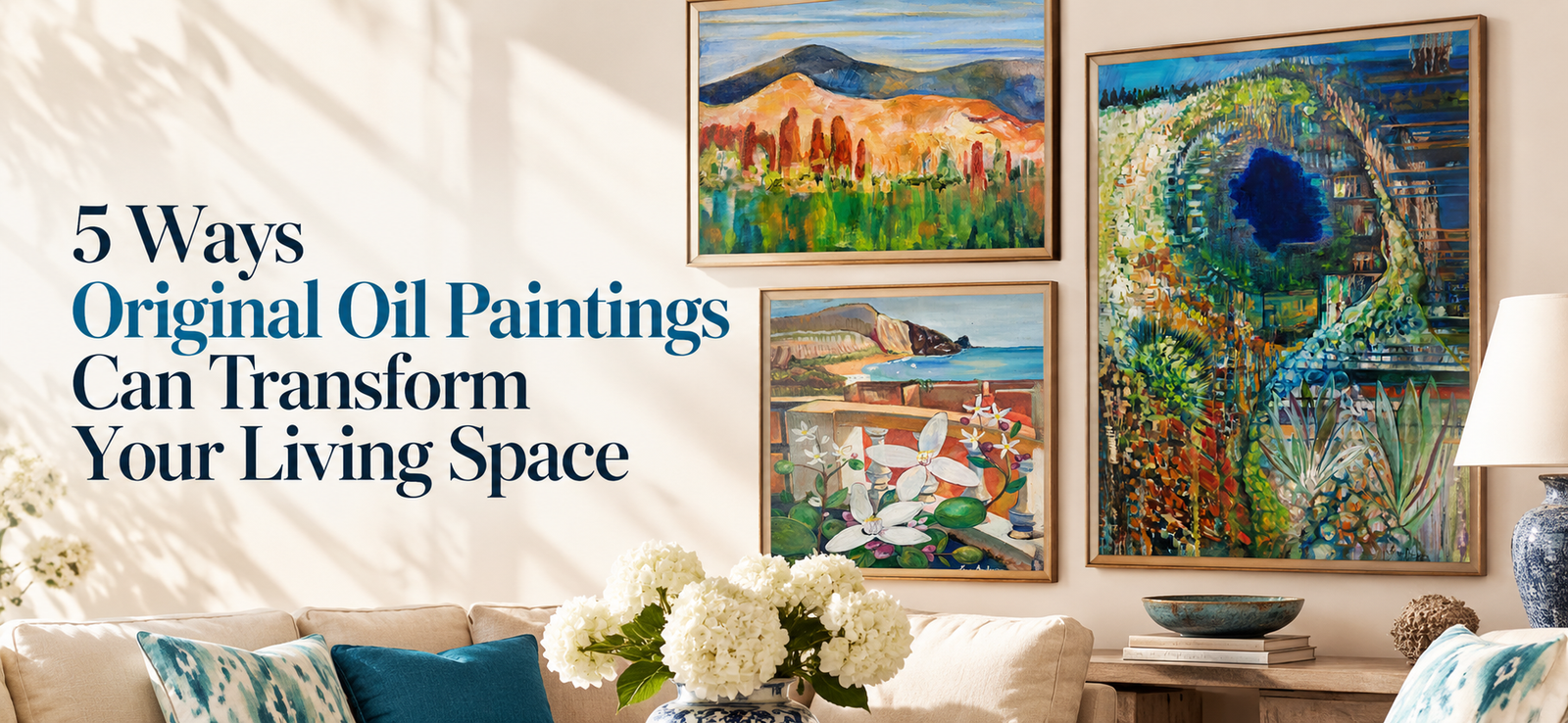
You can repaint a wall, buy a new sofa or swap out every lamp in a room, and it may still feel like something is missing. Often, what is missing is art. Original oil paintings in particular have a way of changing how a room feels, because they bring color, texture and a human presence that manufactured décor rarely matches.
This article covers five specific ways original oil paintings can shape your home, then gets practical: how to choose the right size, color and subject for each room, where to hang it, and why buying art you connect with matters more than matching it to your furniture.
Original oil paintings transform a living space by creating a focal point, adding color, setting a mood, giving the room personality and tying the interior design together. Because an original is one of a kind, with visible brushwork and texture, it makes a room feel lived-in and personal in a way mass-produced décor usually does not.
Oil paint has qualities that suit a home. It can be applied thinly for luminous color or thickly for texture you can see from across a room. The surface catches light differently throughout the day, so a painting can look slightly different in the morning than it does at night.
An original also has a presence that reproductions lack. You are looking at the actual strokes the artist made. That is part of why many people describe original art as making a room feel more alive. If you are weighing an original against a reproduction, our guide to original art vs. art prints explains the differences in detail.
Every room benefits from a place where the eye lands first. In many living rooms, that is a television or an empty wall. An original oil painting gives the room a better anchor.
A single strong painting draws attention and organizes the space around it. Furniture arrangements start to make sense when they face or frame the artwork.
One larger painting often has more impact than several small pieces spread across a wall. If you love smaller works, group them tightly so they read as a single unit.
Paint on walls is usually neutral. Upholstery tends to be neutral too, because it is expensive to replace. Art is where many homes get their color.
A painting introduces color in a concentrated, deliberate way. It can bring warmth to a cool room, energy to a calm one or depth to a space that feels flat.
You can echo one or two colors from the painting elsewhere in the room, such as a throw pillow, a vase or a book spine, to make the room feel connected. Keep it subtle. A few repeated notes are enough.
Different paintings create different atmospheres. A soft landscape can make a room feel restful. A bold abstract can make it feel energetic. A still life can make it feel warm and domestic.
The subject, palette and brushwork of a painting all affect how a room feels. Blues and greens are often associated with calm. Reds, oranges and golds feel warmer. Loose, expressive brushwork feels lively. Controlled, detailed painting feels quieter.
Think about how you want each room to feel before choosing art. A bedroom might call for something restful. A dining room might suit something warm and sociable.
Furniture stores sell the same pieces to thousands of people. An original painting is one of a kind. It says something about the people who live in the home: where they have been, what they love and what catches their eye.
Original artwork tells a story. Guests often ask about paintings, and the answers, such as where you found it, who made it or why you chose it, make a home feel personal.
Choose work that means something to you. A painting of a place you have visited, a subject you love or an artist whose story you know will keep rewarding you for years.
The best interiors feel as if the art and the room belong together. That does not mean the painting has to match the sofa. It means the painting relates to the room’s scale, colors, materials and style.
A painting can bridge different elements. A landscape with warm wood tones might connect a leather chair and oak floors. An abstract with a strong blue might tie together a rug and a set of ceramics.
Consider the frame, too. A simple frame suits modern spaces. A more ornate frame can work in traditional rooms. Some contemporary paintings on deep canvas look best unframed.
Choose original art for your home by considering the room, the wall size, the colors you live with and, above all, whether the painting moves you. Measure your space first, think about the mood you want and look at many works before deciding. The right painting is one you will still enjoy after the novelty wears off.
Size mistakes are the most common problem with art at home. A few guidelines help:
Before buying, use painter’s tape or kraft paper cut to size to mark the painting’s dimensions on the wall. Live with it for a day to see how it feels.
Look for paintings that share at least one color with the room, or that bring in a color the room is missing. A neutral room gives you the most freedom. A room that is already colorful often benefits from a painting with a calmer palette or one that picks up an existing accent.
Living rooms usually suit larger paintings with strong presence, since this is where people gather and where art is seen most. Landscapes, abstracts and bold still lifes are common choices. Pick a size that works with the main seating area and a palette that relates to the room’s key colors.
Warm, sociable paintings suit dining spaces. Still lifes, gardens and rich colors work well. Consider how the art will look by candlelight. Artwork near the table can also inform your table styling, a connection we explore in our guide to styling a tablescape with artistic table linens.
Choose calm, restful work. Softer palettes and quieter subjects are easier to live with first thing in the morning and last thing at night.
These are good places for a painting that makes a first impression, or for a smaller work viewed up close.
It is tempting to buy a painting because it matches the sofa. The problem is that furniture changes. Sofas get replaced, rooms get repainted and you move. If the painting was chosen only to match, it may not fit anymore.
Instead, choose a painting that relates to the room in a looser way, through a shared color, a similar mood or a complementary style, and that you would still love in a different room. Art you connect with tends to move with you from home to home.
The most meaningful paintings in a home are rarely the ones chosen for resale value or trend. They are the ones that remind you of a place, a feeling or a time in your life. When you choose a painting because it resonates with you, you are more likely to notice it every day and keep it for years.
Knowing the artist can deepen that connection. Sara Anderson, for example, shares the inspiration behind her work in her journal and in her inspiration posts. Her original artwork, from lively paintings to intricate sketches, also appears across her scarves, robes and home goods, so a painting on the wall can connect with pieces you use and wear every day.
Look for artwork that shares one or two colors with your room, suits the room’s style and fits the wall proportionally. Avoid matching too precisely to furniture. A painting that relates to the space through color, mood or style will feel connected and remain relevant even if you change the furniture.
Artwork improves home décor by creating a focal point, adding color and texture, and giving rooms personality. An original painting also brings a human element that manufactured décor lacks. Even a single well-chosen piece can make a room feel finished and more personal.
A common guideline is to hang artwork so its center sits around 57 to 60 inches from the floor, roughly eye level for most people. Above a sofa or console, leave about 6 to 10 inches between the furniture and the bottom of the frame. Adjust for tall ceilings.
Not especially. Keep them out of direct sunlight, away from heat sources and in rooms with stable humidity. Dust gently with a soft, dry brush or cloth. Avoid household cleaners. For serious damage or cleaning, consult a professional conservator rather than attempting repairs yourself.
No. Art does not need to match the sofa exactly. It can pick up one color from the room or relate through mood and style. Paintings chosen only to match furniture often lose their place when the furniture changes, while art you love tends to work across rooms.
It depends on the wall. One large painting creates a strong focal point and a calm, uncluttered look. Several small paintings can work if grouped tightly with even spacing so they read as a single arrangement. Avoid scattering small works across a large wall.
A single original painting can change how a room feels every day. If you are looking for art with a personal story, explore Sara Anderson’s original works and see how her paintings also take shape across her collections.
Original oil paintings do more than decorate. They give a room a focal point, add color, shape the mood, express personality and tie the interior together. Choose work by size, color and room, hang it with care and, most of all, pick paintings you connect with. Those are the ones that will make your home feel like yours.